
In an office, culture happens whether anyone plans it or not. People overhear each other’s jokes, notice who stays late, absorb the unwritten rules just by being in the room. Take the office away and none of that transmits automatically anymore — culture doesn’t disappear, it just stops being ambient. If nobody deliberately builds it, what fills the vacuum is usually a Slack channel full of status updates and a team that only really “meets” in a recurring standup nobody enjoys.
This guide breaks down what actually builds a strong remote team culture in 2026 — the five pillars that hold it up, a simple team charter you can copy, a cadence for keeping connection alive without adding more meetings, and the mistakes that quietly erode culture even on teams that mean well. This is the first post in our Remote Team Culture series. Over the next few weeks we’ll publish a new-hire onboarding tutorial, an async communication playbook, and reviews of the tools distributed teams use to stay connected — bookmark this page as your starting point.
Why Culture Doesn’t Just “Happen” Anymore
Recent workforce data backs up what most remote leaders already feel in their gut: engagement is harder to sustain than it used to be. One widely cited 2026 workforce trends report found the share of workers describing themselves as “very or extremely engaged” fell to 64%, down sharply from 88% the year before — and professional development, not remote work itself, was the strongest driver of the engagement that remained. Gallup’s research points to the same lever from a different angle: a manager’s day-to-day behavior — clear expectations, frequent feedback, recognition, and matching people to what they do best — accounts for roughly 70% of the variance in team engagement. None of that happens by osmosis on a distributed team. It has to be designed.
Three patterns show up again and again on teams that let culture happen instead of building it:
- Communication becomes purely transactional. Every message is a status update, a blocker, or a deadline — nobody talks unless there’s a task attached, so nobody feels like more than a set of Jira tickets.
- New hires learn the culture from Slack archaeology. Without a deliberate onboarding path, a new remote hire pieces together “how we actually work” by scrolling old channels and guessing — and forms their first impression of the company during the two weeks that matter most.
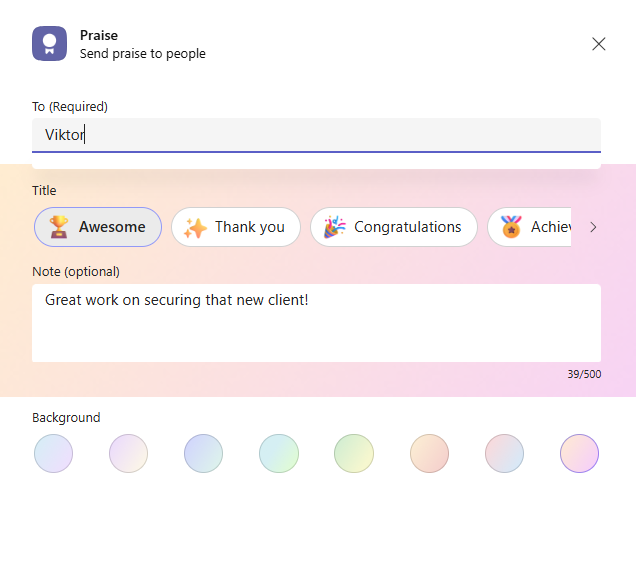
- Recognition gets quieter, not louder. A “great work” said in passing in a hallway never happened in the first place remotely — and if nobody replaces it with something deliberate, contributions that used to be visible just stop being seen at all.
The Five Pillars of Intentional Remote Culture
Every remote culture playbook worth reading in 2026 converges on roughly the same five things. None of them require an office, a big budget, or a dedicated “culture” hire — they require someone to own them on purpose.

1. Deliberate communication norms
Write down which channel is for what, which topics default to async (most of them) and which genuinely need a live call (anything ambiguous, sensitive, or emotionally loaded), and what response-time expectations are reasonable across time zones. Teams that skip this end up with the worst of both worlds: constant interruption from people expecting instant replies, and important messages that quietly die in a channel nobody checks.
2. Trust built on outcomes, not hours
You cannot see whether someone is “at their desk” on a remote team, and trying to simulate that with green-dot status checking or surveillance software poisons trust faster than almost anything else. Judge work by whether it shipped and whether it was good, not by online hours. This is as much a leadership discipline as it is a culture value — managers have to actually stop checking who’s “active” for the team to believe it.
3. Structured onboarding that transmits culture early
A new hire’s first two weeks are the highest-leverage window you get for shaping how they think the company actually works — not how it’s described in a welcome email. A documented onboarding path with a real human contact map (specific people to talk to in week one, not just a Slack invite) does more for culture than any all-hands speech.
4. Regular, real connection — async and sync
Async is more efficient for most work, but it’s a poor tool for relationship-building and trust development between people who’ve never met in person. The teams that get this right don’t abandon live time — they concentrate it. A short weekly all-hands, regular 1:1s between managers and reports, and (where budget allows) an annual or twice-yearly in-person gathering cover most of what’s needed. Notably, research on remote-culture benchmarks shows the biggest jump in connection comes from moving a team from zero in-person gatherings a year to just one — the marginal benefit of adding a third or fourth gathering is much smaller than people assume, which is useful news for teams working with a limited travel budget.
5. Recognition that’s visible and frequent
Recognition has to be re-engineered for remote work because the ambient version — a manager overhearing praise and repeating it, a round of applause in a meeting room — doesn’t exist anymore. Public, specific, peer-to-peer recognition (a dedicated Slack channel, a lightweight bot, or just a standing agenda item in the all-hands) replaces it, but only if someone makes it a habit rather than an occasional gesture.
Write a One-Page Remote Team Charter
Most of what separates a deliberate remote culture from an accidental one is a single document: a team charter that gets written once, revisited quarterly, and actually referenced when disagreements come up. It doesn’t need to be long. A useful version answers these questions in plain language:

| Charter Section | What It Should Answer |
|---|---|
| Core hours | What window (if any) does everyone overlap for live collaboration, given the team’s time zones? |
| Communication defaults | Which channel/tool is for what, and what’s the expected response time for each? |
| Meeting rules | Which meetings are mandatory, which are optional-with-recording, and what earns a “this could’ve been async”? |
| Decision-making | Who has the final call on what, and how are disagreements resolved without a live room? |
| Recognition | Where and how often does the team publicly acknowledge good work? |
| Connection cadence | What’s the standing rhythm for non-work conversation — weekly, monthly, and annual? |
Draft it with the whole team in a shared doc rather than handing down a finished version — the act of debating the answers is itself a culture-building exercise, and people follow rules they helped write far more readily than rules they were handed.
A Simple Quarterly Culture Cadence

Culture work fails most often not because nobody cares, but because nobody owns a schedule for it. A cadence that’s easy to actually sustain:
- Weekly: a 15-30 minute all-hands or team huddle with at least one non-work minute built in — a quick win, a recognition shout-out, or a rotating “get to know you” question.
- Biweekly: manager 1:1s that include a genuine “how are you doing” beyond project status — this is where isolation and burnout usually surface first.
- Monthly: a purely social touchpoint with no agenda — a virtual coffee pairing, a themed watercooler channel prompt, or a async show-and-tell thread.
- Quarterly: revisit the team charter as a group — what’s working, what’s being ignored, what needs to change now that the team has grown or shifted time zones.
- Annually (budget permitting): one in-person gathering. Data on remote-team benchmarks consistently shows this single gathering delivers the largest jump in connection of any culture investment — bigger than the second, third, or fourth gathering combined.
Tools That Support (But Don’t Replace) Culture Work
No tool builds culture by itself — but the right ones make the habits above easier to actually keep. A few categories worth knowing:
- Team chat with AI features (Slack, Microsoft Teams): beyond messaging, both now offer AI-generated channel summaries and huddle recaps that help people catch up asynchronously instead of feeling like they missed something live.
- Async video (Loom and similar): a two-minute recorded walkthrough replaces a meeting invite far more often than teams realize, and lets people absorb context on their own schedule.
- Recognition bots (CultureBot, Bonusly-style tools, or a plain Slack channel): automate the reminder to give recognition so it doesn’t quietly stop happening once the novelty wears off.
- Virtual coffee/watercooler matchers: tools that auto-pair teammates across departments for a casual 20-30 minute call solve the “we never actually talk to sales/engineering” problem without anyone having to organize it manually.
We’ll publish hands-on reviews of the two most relevant tools for this cluster — Slack’s AI features and Loom — along with a head-to-head comparison of Slack vs. Microsoft Teams, later in this series.
Mistakes That Quietly Kill Remote Culture
- Treating culture as an HR initiative instead of a leadership habit. A values poster in a Notion doc does nothing if managers don’t model the behaviors in their own 1:1s and public messages.
- Confusing “more meetings” with “more culture.” Piling on extra calls to compensate for feeling disconnected usually backfires — it adds fatigue without adding trust. Fewer, more intentional touchpoints beat more, generic ones.
- Letting time-zone majorities set the default. If most of the team is in one time zone, it’s easy to schedule everything around them and quietly turn everyone else into second-class participants who only ever see recordings.
- Skipping the charter conversation because “everyone already knows how we work.” They don’t — not the new hire from three months ago, and often not even the founding team, once enough assumptions have quietly diverged.
- Measuring culture by vibes instead of asking. A short, recurring anonymous pulse survey (even four questions, quarterly) catches disengagement months before it shows up as a resignation letter.
Frequently Asked Questions
Can a fully remote team really have as strong a culture as an in-office one?
Yes, but it looks different rather than weaker. Research on inspiration and engagement at work has found remote employees are no less likely to feel inspired by their work than colleagues in the same location as their leader — the mechanism just has to be built deliberately instead of happening by proximity.
How often should a remote team meet in person?
Once a year delivers the single largest jump in team connection of any gathering cadence, according to recent remote-culture benchmark data. A second or third annual gathering helps further but with meaningfully smaller returns — useful to know if budget is the limiting factor rather than desire.
Who should own remote culture on a small team without an HR department?
It doesn’t need a dedicated title, but it does need one named owner — usually the founder or a senior operator — who’s accountable for the charter staying current and the cadence actually happening. Culture initiatives that are “everyone’s job” tend to become no one’s job within a quarter.
Final Takeaway
An office used to build culture as a side effect of people simply being in the same room. Remote teams don’t get that side effect for free — they have to design for it: clear communication norms, trust based on outcomes, onboarding that transmits how things really work, a real cadence of connection, and recognition that doesn’t disappear just because nobody’s in the next cubicle to overhear it. None of it requires a big budget or a dedicated culture team — it requires one person to own a one-page charter and an actual calendar cadence, and the discipline to revisit both every quarter. We’ll be publishing a new-hire onboarding tutorial, an async communication playbook, and reviews of Slack AI, Loom, and Slack vs. Microsoft Teams over the next few weeks — this page will link out to each as it goes live.